Our Perspective

Explore our extensive operational and industrial technology business and market insights, authored exclusively by VDC’s seasoned teams of consultants.

Can Engineering Organizations Safely Scale AI Across the Lifecycle?

State of the Market The pace of change in engineering has never been faster. Products are becoming more complex, more connected,

Pictures are Worth a Thousand Words – Industrial Data May Be Worth More 

Last week, Noetra, a Japanese AI company, announced the launch of their national research effort with the goal of having “Real-World Native AI” by 2030. Noetra will be building out

Middle Market Guidance from the Forefront of Physical AI – Autonomous 2026 Conference, San Francisco

What a day spent among VCs, founders and robots in San Francisco tells middle-market investors about where this industry is headed, and when it becomes an opportunity for middle market PE.

What NEXA’s Sidelink Initiative Signals for Mission-Critical Communications

In industries where communications are critical, deploying devices with specialized capabilities has traditionally required lengthy timelines and significant costs. One such capability is sidelink, which enables devices to communicate directly with one another without relying on cellular network infrastructure. As technologies such as sidelink move toward operational

Beyond “Sell By”: How California’s Latest Food Labeling Law Could Transform Food Supply Chains

California’s Assembly Bill 660 (AB 660), which took effect on July 1, 2026, may appear to be a simple labeling

Guidance for Private Equity Investors on AI-Enabled Product Strategies

If your fund holds industrial technology or operational technology companies, you have probably already had the conversation. Maybe you even started it. The board meeting where someone asks the CEO how the company is integrating AI into its products. The value creation conversation that focuses on the

A Maturity Model for Managing the Long Tail

In most industrial and operational tech businesses with recurring revenue, leadership's attention flows to the top of the customer base. The largest accounts get named owners, quarterly business reviews, custom roadmaps, and executive air cover. That focus is rational, but it leaves a structural blind spot. Beneath

Agentic AI at the Edge

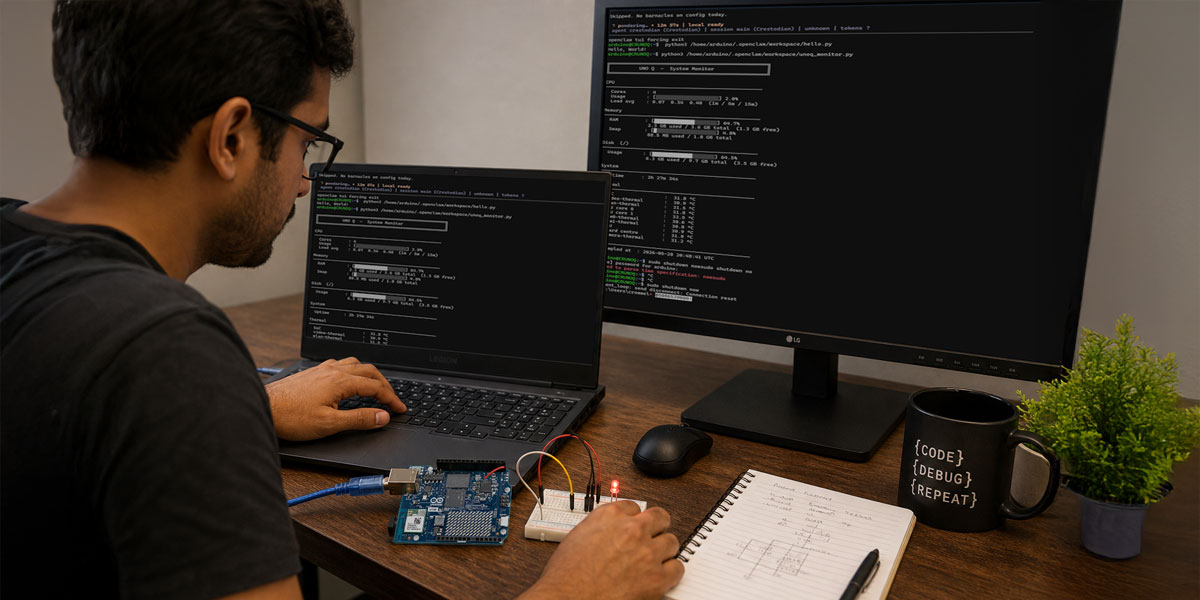
Exploring the integration of AI at the edge, this research note documents the deployment of OpenClaw on the new Qualcomm Arduino UNO Q. By leveraging agentic workflows for local system monitoring, the experiment highlights how accessible hardware and flexible tooling enable developers to move from simple prototyping

Healthcare Technology Buyer Priorities: From EHR Challenges to AI Adoption

From patient records to workforce efficiency and resource allocation, healthcare organizations are responsible for managing countless moving parts, all while

Closing the Value Proposition Gap: A Leadership Playbook for Industrial Tech Sales

Your company has a competitive weapon it already owns but likely almost never fires. It's your value proposition, and it’s likely just sitting in its holster. Most industrial and operational technology companies know exactly what they sell and exactly who they sell it to. Nearly every sales

Industrial & Operational Tech Diligence – Why Revenue Retention Can Create A False Picture of A Target’s Health

Recurring revenue is among the most trusted signals of business health, and among the most easily misread. A book of contracted ARR with a high renewal rate is often seen as a powerful indicator of a business that is performing well. Yet these metrics often reveal something

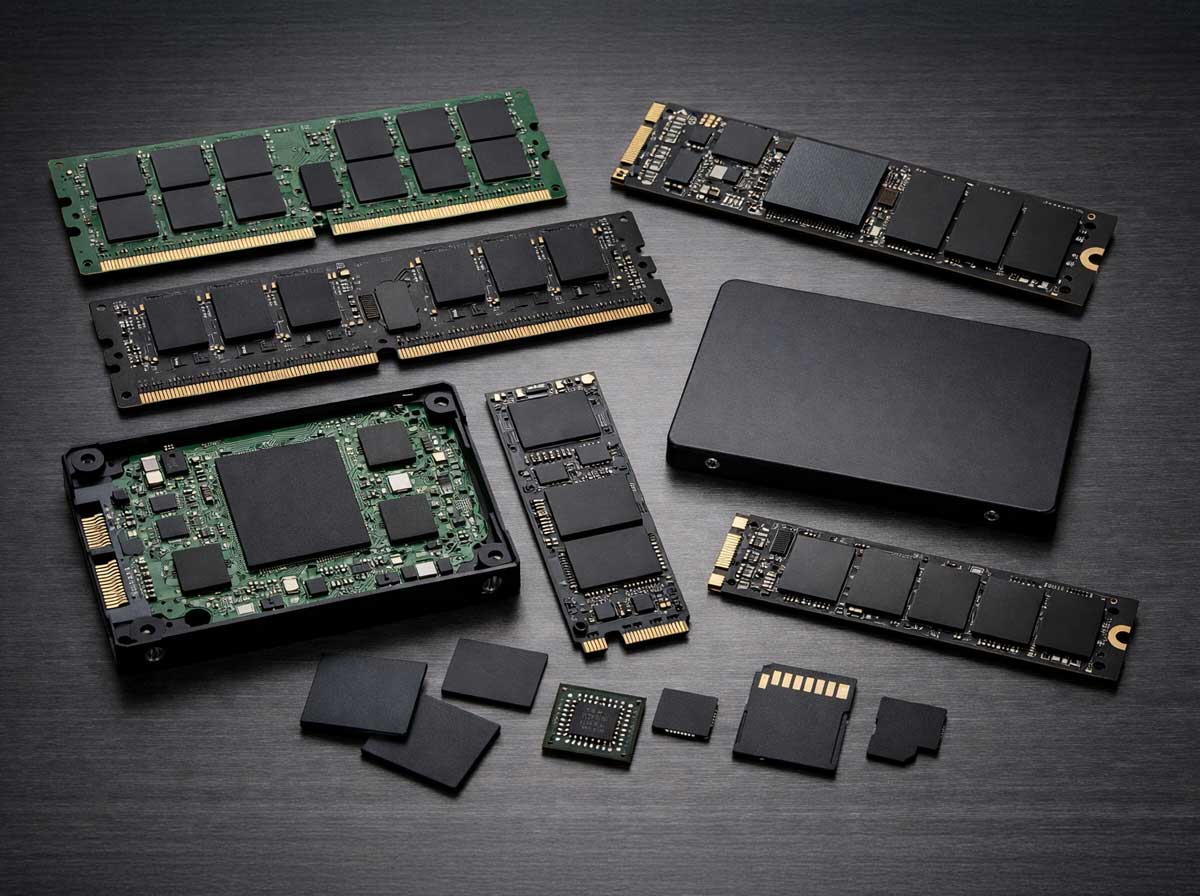
Component Pricing Pressure is Spreading Beyond Memory

In February of this year, VDC Strategy published a piece on the impact of the memory supply shortage on pricing.

Physical AI’s Trillion Dollar Data Problem

When people talk about why language models worked, they usually point to scale: bigger models, more compute, better optimizers. The truth is that the internet did most of the work in creating that scale. By the time GPT-3 arrived, decades of human writing had already been digitized,

Industrial Tech Leadership: How the Best Companies Balance Engineering and Commercial Pressure

Industrial and operational technology companies face a uniquely difficult challenge in managing many aspects of their business, and culture is no exception. On the one hand, they must satisfy the rigorous expectations...

Honeywell Announces PSS Divestiture; Brady Corporation Emerges as the Winner

Honeywell has formally exited the AIDC/Track & Trace and Enterprise Mobility markets, announcing the sale of its Productivity Solutions &

How Physical AI Will Become the Operator of the Real World

While the AI most people know runs in distant data centers, answering questions and generating images from the cloud, Physical AI operates where the action actually happens: on the device, at the edge, in the moment. It drives cars, pilots drones, stocks warehouses, performs surgery, and walks

Industrial & Operational Tech – A Better Way To Assess Risk

Companies that build and sell industrial and operational technology face a distinctive risk environment. Their products are often deeply embedded in customers' critical workflows such as facility operations, fleet management, industrial process control, or transaction processing, which means that both the cost of failure and the value

AI Is SaaS’s Worst Nightmare – And Industrial Tech’s Biggest Windfall

While SaaS valuations deflate under AI-native competition, a quieter AI-driven revolution is gaining momentum across manufacturing lines, distribution centers, retail floors, and critical infrastructure; anywhere operations meet the physical world. The result is going to be transformative for industrial and operational tech companies and investors, as value

AIDC and Enterprise Mobility – Pricing for the New Normal

Pricing stability across AIDC and enterprise mobility hardware seems to be a thing of the past. While there was a

Panic Buttons and the New Rules of Retail Worker Safety

Retailers are prioritizing panic button technology as new safety legislation in states like Washington and New York takes effect. These mandates require accessible internal response systems to protect frontline workers. By leveraging integrated software and wearable solutions, retailers can meet complex regulatory requirements while enhancing employee well-being

TI’s Silicon Labs Acquisition Signals a New IoT Era

Wednesday, Texas Instruments (TI) (NASDAQ: TXN) made the landmark announcement of its intent to acquire Silicon Labs in an all-cash

Qualcomm sponsored VDC's travel to CES 2026

CES 2026: Physical AI Steps Into the Real World

CES 2026 underscored the shift from cloud-first intelligence to embodied systems, where machines can perceive, reason, and act in safety-critical environments. VDC

ServiceNow’s Armis Acquisition Signals the Next Phase of OT and XIoT Cybersecurity

ServiceNow’s announced acquisition of Armis marks a significant moment in the evolution of the OT and extended IoT (XIoT) cybersecurity

AI, 5G, and the Edge: What’s Next for Rugged Tablets?

Rugged tablets are entering a new era. Once reserved for the harshest environments, enterprise-grade rugged tablets have become foundational to

Scroll to Top

About Mitch

Mitch Solomon

President

Mitch has spent years supporting senior leaders of operational and industrial technology companies as well as private equity investors that participate in the space.  He is an active member of the Technology and Innovation Council at Graham Partners, a leading industrial technology focused private equity firm, and serves on the advisory boards of OptConnect (a top IoT connectivity provider) and DecisionPoint (a rapidly growing operational technology systems integrator).  Mitch has worked closely with a wide range of industrial technology clients on a diverse array of growth opportunities and challenges including applications of AI, c-suite recruiting, strategic planning, new market identification and entry, product strategy, competitive positioning, revenue retention, value proposition identification and messaging, sales strategy and execution, and board presentations. Mitch holds a BA from Northwestern University and an MBA from The Tuck School of Business at Dartmouth College.