
How Qualcomm and Foundries.io Are Simplifying Secure OTA Updates for Device Manufacturers
Growing cybersecurity requirements and regulations like the EU Cyber Resilience Act are forcing manufacturers to rethink how they secure and

Growing cybersecurity requirements and regulations like the EU Cyber Resilience Act are forcing manufacturers to rethink how they secure and
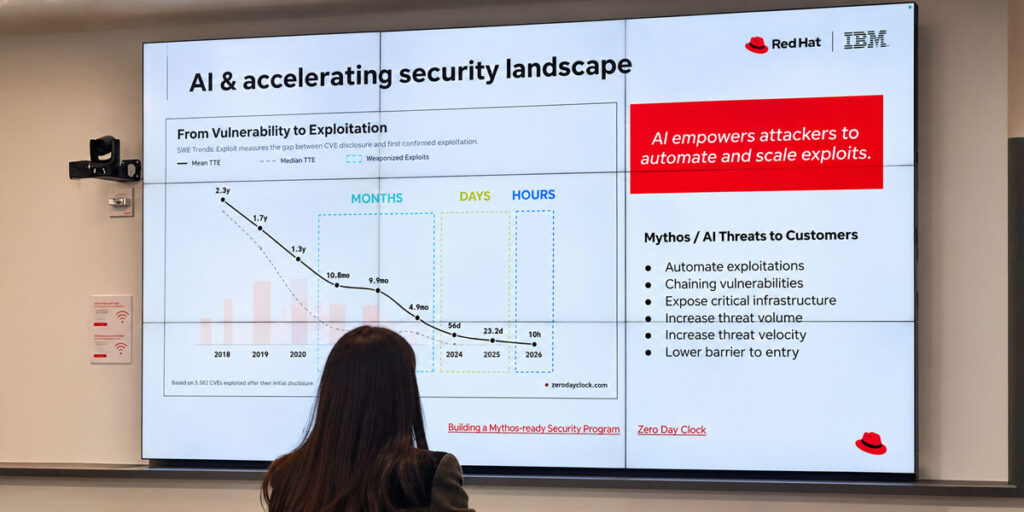
Red Hat OpenShift 5 Release and How AI is Changing the Game in Software Security Red Hat has released version

Qualcomm & VDC on the Future of Edge AI Qualcomm sponsored VDC’s attendance at Dragonwing IoT Day How can companies

Historically, reliability testing in many cases was the quiet final step in building a semiconductor, something that happened after design

In recent years, the Edge AI industry has shifted from the experimentation phase to full scale production and deployment. With this shift now well under way, we can see where Edge AI is being deployed and what engineering teams value in its current form within the embedded domain. As accelerated computing solutions become more prevalent, differentiation is shifting from general-purpose TOPS performance to application efficiency, lifecycle support, and software enablement.

The pace of change in engineering has never been faster. Products are becoming more complex, more connected, and under more regulatory pressure than ever before. At the same time, AI use in lifecycle management has expanded from chatbots and copilots into a large set of assisted work capabilities. These developments have made engineering timelines shorter and have raised the expectations for what Application Lifecycle Management (ALM) and Product Lifecycle Management (PLM) tools should be capable of.

Exploring the integration of AI at the edge, this research note documents the deployment of OpenClaw on the new Qualcomm Arduino UNO Q. By leveraging agentic workflows for local system monitoring, the experiment highlights how accessible hardware and flexible tooling enable developers to move from simple prototyping to sophisticated, hardware-aware AI development across Qualcomm’s compute continuum.

Wednesday, Texas Instruments (TI) (NASDAQ: TXN) made the landmark announcement of its intent to acquire Silicon Labs in an all-cash

CES 2026 underscored the shift from cloud-first intelligence to embodied systems, where machines can perceive, reason, and act in safety-critical environments. VDC

As IT, OT, and IoT systems converge, a new era of connected operations is taking shape. The Extended Internet of Things (XIoT) now links