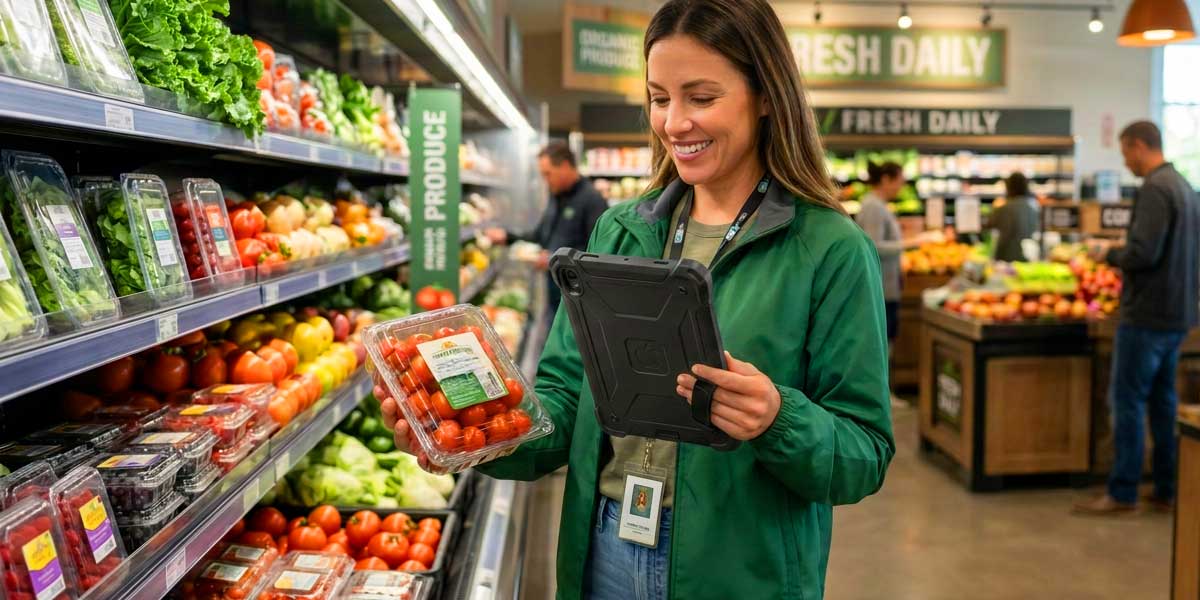
Better Data Can Mean Faster, More Precise Food Recalls
Food recalls can quickly expand when organizations cannot determine exactly which ingredients, lots, products, and locations are affected. Digital traceability gives food and beverage organizations the data needed to establish more precise recall boundaries, respond faster, and reduce unnecessary product withdrawals. VDC Strategy’s latest research examines how food safety, labeling requirements, retailer mandates, and traceability technologies are changing the way organizations prepare for and respond to recalls.
Inside the VDC View
- The business case for better traceability: Why faster and more precise recalls rank as the top realized or expected traceability benefit among food and beverage respondents
- The data behind recall precision: How product, lot, date, source, and event data can help organizations narrow the scope of affected products
- The shift toward machine-readable traceability: How 2D barcodes, GS1-128, OCR, machine vision, and RFID can improve the capture and accuracy of recall-critical data
- The growing complexity of food labeling: Why label inspection alone cannot address every failure and how labeling, artwork management, production controls, and lot traceability work together
- The deadlines shaping traceability investment: How retailer requirements are influencing suppliers even as FSMA 204 enforcement has been delayed
The research also examines the evolving technology landscape and the roles of Jekson Vision, Mojix, ReposiTrak, SEA Vision Group, TraceGains, Trustwell, and more.
Download the VDC View to understand how stronger digital traceability can improve recall precision, reduce unnecessary withdrawals, and strengthen food safety operations.)