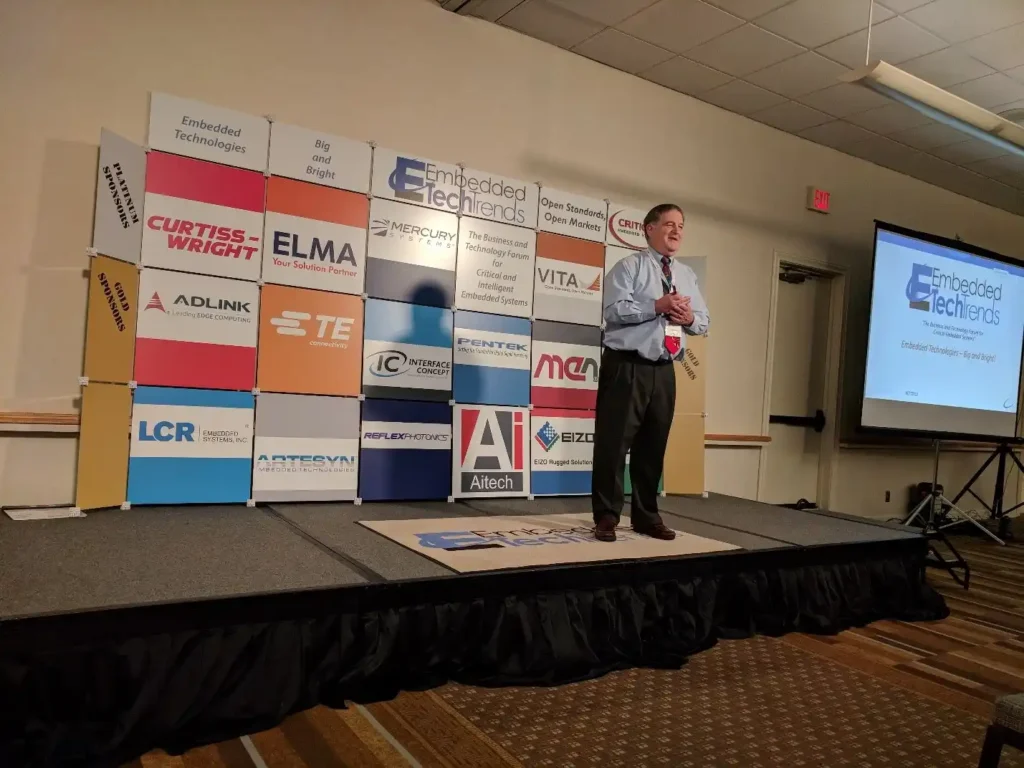
Embedded Tech Trends 2018 highlighted several important trends impacting the markets for critical and intelligent embedded systems. Embedded Tech Trends is an annual business and technology forum where technology suppliers and media come together to discuss technology advancements, standards, and other important topics for anyone developing boards, systems, and software for critical and intelligent embedded computing. This year’s event was hosted last week in Austin, Texas with a focus on the “biggest technologies and brightest solutions” behind high performance computing problems in mission-critical environments. While there was a bevy of interesting embedded engineering and business issues discussed, a couple of specific trends permeated the conversations including standardization, systems consolidation, and security.
Standards are imperative to the merchant markets for embedded hardware and coordination between standards bodies is becoming more important to contend with increasingly complex system designs. Embedded Tech Trends is headed by VITA, the standards organization behind popular embedded computing factors like VME and VPX, but is standards-agnostic and this year featured PICMG as a sponsor. There is substantial overlap between VITA and PICMG in terms of hardware suppliers and each standards body is making advancements in different areas. For example, PICMG’s future work focuses on creating a meta-data model for IIoT and further enabling COM Express users through developer kits. Collaboration between standards organizations will be critical for established standards bodies (e.g., IEEE, IPSO, ETSI) and newer groups (OCF, Thread, IIC) alike.
Mission-critical systems are typically the last to be consolidated within embedded hardware but the trend is sweeping aerospace, military, and other industries to leverage new technologies while continuing OEMs’ constant drive to reduce SWaP-C. Artesyn Embedded Technologies, for example, is helping its customers avoid using stacks of inefficient and difficult-to-maintain 1U servers with a rugged ATCA-based solution. Adding capabilities or servers is less of an issue in enterprise or datacenter environments than military or other rugged deployments with less control over power and space (and weight for portable units).
Hardware-based security is a hot button issue today given the recent exploits of Meltdown and Spectre revealed earlier this year, which impact nearly all embedded CPUs sold through the past couple of decades. Maintaining hardware security is a difficult problem that extends throughout the design and supply chain. Vulnerabilities can be introduced at many levels of the design lifecycle from a number of bad actors. Mercury Systems highlighted how even commercial protection from processor suppliers, for example, is not sufficient though some technologies such as root of trust and protected boot can go a long way and are largely underutilized today. Trusted Platform Modules are also gaining significant traction among boards suppliers like Concurrent Technologies for defense and other customers.
Embedded Tech Trends highlights that even traditionally slow-moving, highly-regulated embedded industries are being thrust into technological change with new engineering requirements and standards. The modern design and engineering landscape demands more collaboration among embedded hardware technology providers, standards organizations, and others throughout the ecosystem to sufficiently address emerging high performance embedded computing applications and market opportunities. Those that can integrate the biggest technologies (together) will create the brightest embedded solutions.
A special shout out and thank you to Jerry Gipper, VITA Executive Director, for putting together and managing this annual event. We look forward to seeing everyone next year in San Diego!
View the 2018 IoT & Embedded Technology Research Outline to learn more.