CES 2026 underscored the shift from cloud-first intelligence to embodied systems, where machines can perceive, reason, and act in safety-critical environments.
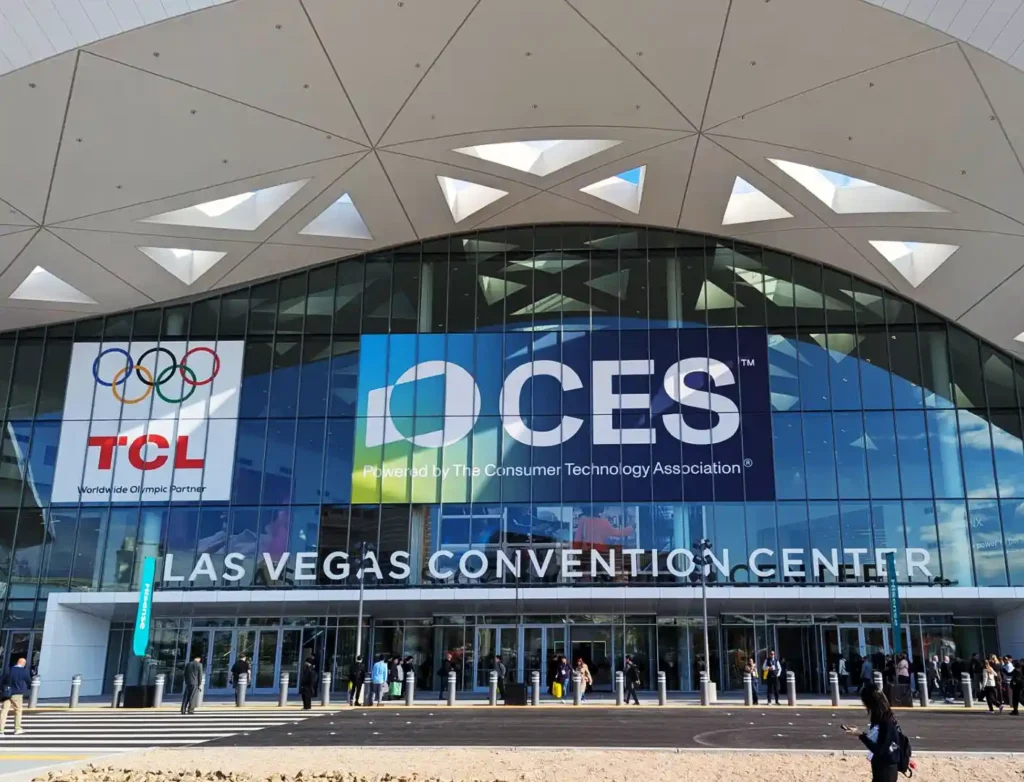
VDC attended CES 2026 in Las Vegas, which ran January 6–9, 2026 across 13 venues, including the newly renovated Las Vegas Convention Center campus. CES opened after two Media Days packed with product launches and partnership announcements, and the show floor exhibits reflected a clear pivot from fewer “concept-only” AI promises to more real-world applications aimed at robotics, mobility, and industrial operations.DC attended CES 2026 in Las Vegas, which ran January 6–9, 2026 across 13 venues, including the newly renovated Las Vegas Convention Center campus. CES opened after two Media Days packed with product launches and partnership announcements, and the show floor exhibits reflected a clear pivot from fewer “concept-only” AI promises to more real-world applications aimed at robotics, mobility, and industrial operations.
Key takeaways from CES 2026 include:
- Robots are taking center stage at CES 2026, entering safety-critical environments. Humanoids, collaborative robots, and mobile robots are poised to work alongside humans, making real-time determinism, functional safety, and fault isolation essential.
- Autonomy is expanding into humanoids, with autonomous vehicle-grade perception, safety models, and compute stacks being repurposed for humanoid and industrial robotics.
- Physical AI is now at the forefront, with a clear shift in the industry narrative from cloud intelligence to machines capable of perceiving, reasoning, and acting alongside humans in real-world applications.
- The convergence of automotive technology continues, as software-defined vehicles, autonomy-native cabin concepts, and new compute platforms indicate that cars are evolving into embodied AI systems, rather than merely serving as modes of transportation.
From spectacle to safety, determinism, and trust
As the dancing-robot demonstrations mature into real deployments, the conversation is shifting away from novelty and toward real-world use cases, validated safety, real-time determinism, and operational trust. Standards will need to evolve to keep pace with rapid developments in the market. The evolution of functional safety (e.g., ISO 26262 / IEC 61508 approaches) and cybersecurity (ISO 21434-style thinking) for humanoids and collaborative robots remains an open question, especially as “general-purpose” robots begin operating in mixed human-robot workflows with changing tasks, tools, and environments.
More CES 2026 coverage is coming from VDC, exploring where Physical AI meets robotics, SDV platforms converge with autonomy, and mixed-criticality safety becomes the gating factor for adoption.